Why Does My Music Sound the Way It Does?
written by Carlos C. Mauro Gálvez
Bahlest Eeble Readings Cycle 19 Fellow
Since moving to the United States eight years ago, I have often been asked whether I compose “Peruvian music.” At first glance, the question seems simple, but I have found it surprisingly difficult to answer. It is not as simple as a yes or no.
Allow me to share a bit about my life:
I was born and raised in Lima, the capital of Peru. From an early age, my parents made a point of exposing me to as much Peruvian culture as possible and traveling throughout the country whenever we could. This ingrained in me an unshakable respect for the many artistic expressions present across Peruvian territory.
I am not afraid to generalize and say that, in this day and age, one of the few values that unites Peruvians, regardless of political or religious affiliation, is the pride we take in what we understand as “Peruvian culture.” We treasure, respect, and promote what we perceive as part of our national identity.
In music, figures many Peruvians consider part of their national identity include Chabuca Granda, who mesmerized both Peruvians and international audiences with her interpretations and compositions of Peruvian waltzes; Yma Sumac, who gained worldwide fame for her extraordinary vocal range and virtuosic interpretations inspired by Andean music; and artists such as Arturo“Zambo”Cavero, Óscar Avilés, Raúl García Zárate, and Lucha Reyes, among many others.
So we return to the question:
Do I make Peruvian music?
The term “Peruvian music” often encompasses a broad constellation of pre-Hispanic and post- Hispanic musical traditions originating across the twenty-four departments that constitute modern Peru.
Attempting to define it through a unified aesthetic framework is therefore of limited usefulness, as these traditions vary significantly according to their geographic and cultural contexts. The marinera norteña bears little resemblance to a huayno from Ayacucho. Even within the same genre, notable regional distinctions persist, as a huayno from Ayacucho can differ markedly from one from Cajamarca.
There may be common threads, but they unravel quickly. Any viable definition of “Peruvian music,” in my view, should be inclusive and should not maintain the distinction that academia often draws between “popular” and “academic” music.
A more reductive approach would be to say that any music composed within Peruvian territory, or by a Peruvian national, is Peruvian music. This definition might appear workable, but once we extend it into colonial and post-colonial times, and into the contemporary globalized world, it becomes problematic.
In the age of globalization, claiming that a piece clearly inspired by a musical tradition rooted in another culture is simply “Peruvian music” can be misleading. Imagine a Peruvian artist taking the Blues, translating it into Spanish, and marketing it as “Peruvian music.” Sure, the lyrics are in Spanish and might talk about recurring themes in Peruvian music, but that only makes it Peruvian-flavored Blues, which is to be understood as a spin-off of a genre that emerged and became popularized in the United States, not something a Peruvian can claim cultural or historical ownership of, which is something cultural appropriation inherently implies.
This does not mean that artists should avoid cross-cultural inspiration. On the contrary, musical exchange is essential to artistic growth. My point is simply that terms like “American music” or “Peruvian music” carry cultural and historical weight.
All music today is interconnected; no music emerges from a vacuum. I strongly believe that truly “original” music, understood as music with no traceable influences, is nearly impossible. Nevertheless, societies maintain strong notions of what music represents their national identity.
So then,
At what point does a musical tradition become Peruvian™ rather than Peruvian-flavored?
Or perhaps more importantly:
Who gets to decide?
I will let the reader meditate on the first question. As for the second, my position is that such recognition emerges gradually through social consensus. Cultural heritage is not declared by individuals but negotiated over time within society.
In that sense, whether my music is considered “Peruvian music” is not for me to decide. That determination, if it ever comes, will belong to Peruvian society, likely long after I am gone.
So when people ask me whether I compose Peruvian music, I respond:
“I am Peruvian. Therefore, the music I write is music made by a Peruvian. Nothing less, nothing more.”
All this said, more often than not, people ask that question not to categorize me, but to understand what my music actually sounds like, and why.
That is a far more interesting question:
Why does my music sound the way it does?
I began my relationship with music when I joined my school’s military-style marching band in the seventh grade in high school. I played the bass drum, which I still think is a really cool instrument to play. I remember that carrying it was quite a workout. It was also a lot of fun. The band mostly performed military marching music and Catholic procession music. These genres tend to feature particularly rewarding bass drum writing, since the instrument is often closely tied to the pace at which the march or procession unfolds.
When we did not have to march, I sometimes had the chance to play a suspended cymbal in addition to the bass drum. That was a particularly fun instrument combination to play, especially for someone like me who was really into loud rock and metal.
At the same time, I joined a beginner guitar workshop at school. I quickly realized that I had a knack for both the instrument and for reading notation. I spent hours learning guitar solos from YouTube, especially from a Brazilian channel called CifraClub, in Portuguese, a language which, to this day, I understand very little of.
A few years later, I had the opportunity to leave my country and pursue my undergraduate degree at Berklee College of Music in Boston. During this period of my life, I was “adopted” by my dear friends from Ecuador. We were all musicians, mostly guitarists, so naturally we spent hours improvising together, cooking meals, and climbing up to their rooftop in Brookline to watch the sunset whenever the weather allowed it, in every season of the year.
I initially came to the United States to study recording engineering. However, after some professors heard my work in harmony and counterpoint classes, they encouraged me to consider pursuing composition seriously. I decided to follow their advice.
During most of my undergraduate years, I struggled to find musical material that genuinely intrigued me enough to develop in a composition. Everything seemed too “unoriginal” to my ears. At the same time, because I had been improvising frequently with my Ecuadorian friends, I had become fairly comfortable creating music on the spot with little or no prompting. The practice of improvisation, understood as the spontaneous generation of coherent music, eventually inspired me to approach composition through a similar mindset.
I approach written composition much as I would approach an improvisation. As the composer or improviser, you choose the musical material you wish to present and gradually justify it throughout the duration of the piece so that, in the end, the listener (hopefully) experiences a cohesive narrative arc.
To some extent, the material itself is chosen somewhat arbitrarily. I often think of the process as similar to a Sudoku puzzle: the musical ideas I want to present function like the numbers already placed on the board. The task is then to construct a logical musical context around them so that their presence feels inevitable.
Looking a little deeper into my own consciousness, there are truths I cannot escape. I strongly believe that creative people are shaped by every experience they have lived. In music, this means that the material I choose is influenced, consciously or not, by the totality of sounds that have accompanied my life.
That includes Peruvian waltzes, Afro-Peruvian music, huaynos, carnavales, and yaravíes from the Andes, as well as popular and folkloric traditions from the Amazon rainforest. It includes both niche and widely known rock and metal from the 1950s to the present, music I largely owe to my parents, along with jazz and both standard and contemporary repertoire from the classical tradition.
All of it lodges somewhere in my sonic memory. I would even argue that everyday sounds influence me just as deeply: the rhythmic hum of a bus, the metallic friction of a train, the resonance of power tools, the sounds of a busy kitchen, the distant engine of a plane or boat. These too shape the way I hear.
In recent years, I have grown attached to the simple act of walking, listening, and paying close attention to what we often dismiss as mere environmental noise. Depending on where I am, this can be far more stimulating than listening to recorded music.
In the spirit of the “Sudoku” metaphor, I often find myself asking during these walks:
How would I build a piece around the material emerging from these sounds? How would I justify their existence within a musical logic?
Based on this, I have come to believe that the extraordinary is often disguised as ordinary.
Another significant influence in the generation of musical material is the people who have been in my life, those who are in it now, and those I hope will join it in the future.
Over time, I have come to realize that, regardless of whether someone had a positive, negative, or neutral influence on my life, they still leave a mark. These marks shape one’s character, and in the case of musicians (composers especially), I believe they shape the music we write far more than we are consciously aware of.
Perhaps this is why some of the most eternal and striking pieces of art emerge out of reactions to social dynamics such as love, heartbreak, the loss of someone, or anger toward someone (or several people).
Be it love, admiration, heartbreak, nostalgia, anger, grief, frustration, or despair, I tend to write music that mirrors those emotions as they appear in my own life. Never in an explicit sense, though. I write music first and foremost for my own sake. In that vein, I’m not particularly comfortable with a listener reading in the program notes that a piece was directly influenced by the death of a dear friend or family member, a recent breakup, the excitement of meeting someone, or anger toward someone. I value privacy and, in my view, sharing that level of detail reveals too much and does not add meaningful value to the musical work.
If anything, I try to keep these initial sparks obscure and let only their light and shadow appear in the musical material. That is probably one of the reasons why I am drawn to acoustic, instrumental music. There are no spoken words, and as such it remains open to interpretation, draping a veil of ignorance and mystery between the composer and the audience. It is also a belief of mine that if I have succeeded at my job as a composer, the music should be able to speak for itself rather than rely on a conceptual frame surrounding it.
Of course, the music I write is not exclusively shaped by personal experiences or emotional life. It is also shaped by the broader realities in which we live. In my case, one of those realities is migration.
Lately, it has become a rather dangerous topic to discuss openly. I was initially extremely hesitant to write about it here. For reasons I hope are obvious to the reader, such a topic can be particularly sensitive for artists who rely on visas to live and work in the United States.
Unsurprisingly, among my circle of international musician friends in the U.S., there is considerable worry and uncertainty. There is a specific kind of grief that emerges from witnessing how, one by one, fellow international colleagues are slowly forced to give up a career in this country for reasons that have nothing to do with their indisputable competence in the field.
I have been in the United States for a little while now. I consider myself extremely fortunate to have met so many extraordinary musicians during that time, many of them international. Every time one of them is forced to leave weighs on me and adds to the persistent fear that I might be the next one.
Related to this, another thought came to me through a joke I overheard during a recent recording session where I was improvising. For context, one of the main ways for international artists to remain in the United States is through the O-1B visa, commonly known as the Artist Visa. The requirements to qualify for this visa are defined in rather abstract terms. In essence, an applicant must demonstrate “extraordinary ability in the arts.” In music, this is often interpreted as “exceptional ability in music.”
The joke occurred after a virtuosic display of musicianship by a friend of mine. Someone commented that he had just proven his “exceptional ability” for the purposes of an artist visa, which we all found quite funny. Perhaps we laughed because we knew that, in that particular moment, the display of virtuosity served little purpose beyond showing off rather than making any meaningful musical statement.
Consider the situation: as foreign nationals pursuing careers in music, we are all required, to some extent, to demonstrate that we possess such “extraordinary ability in the arts.”Furthermore, current visa regulations often require proof that our work “cannot be reasonably fulfilled by a United States citizen.” Inevitably, this creates an unspoken sense of competitiveness among international musicians, both among themselves and in relation to U.S. nationals. The system is structured in a way that encourages this dynamic.
For a period of time, I found myself entertaining the idea of writing music that foregrounded virtuosity for its own sake, hoping that doing so might strengthen the case that I possessed “exceptional ability in music” when the time came to apply for the artist visa. Looking back, I am quite dissatisfied with the work that emerged from those experiments.
Gabriela Lena Frank discovered my work through my application to GLFCAM. During my one- year fellowship in the 19th cycle of the BER program, the recurring questions centered on musical identity: What does it mean to be a Peruvian composer in the United States? What music do I truly want to write?
In a way that only she could, Gabriela guided me in reflecting on these questions while drafting and workshopping the piece I wrote for the fellowship, Cuando La Razón Falla, La Intuición Gana. If I had to choose a single takeaway from everything I learned during that year, it would be this: I should only write music when I genuinely feel compelled to write it, not for the sake of virtuosity or bureaucratic validation. The experience also helped clarify the kind of music I want to pursue in the future, including works for large chamber ensembles and orchestras.
Some readers may be aware that work visas are not the only, nor the most common, path toward stable residency. That is true. However, the alternatives often carry their own ethical and interpersonal complexities, and discussing how these intersect with the compositional process would be fascinating but lies beyond the scope of this blog entry.
Finally, in light of all of this, another important question that was presented to me during my fellowship at GLFCAM is:
Why composition?
To that, I would say that music composition is the only emotional outlet that keeps me sane in my search for a dignified life in this country. Composition (and improvisation) have been with me in the darkest and loneliest moments of my life, as well as in the happiest ones. It is the one thing I know I can always rely on in a time when it often feels like there are very few people one can truly depend on.
I do not know whether I will be allowed to stay in this country in the coming months. I certainly hope that I will, but reality does not usually care about what I want. With that in mind, I find some peace in knowing that no one can take away the music I have created or the people I have been fortunate to meet. In the same way, no one can take away the experiences I have lived. I could be anywhere on this planet, and as long as I have ears to listen, and hands to write, I trust that things will eventually work out, even if not in the way I originally imagined.
Despite all of this, there is a beautiful side effect that I find myself appreciating more and more as the future becomes increasingly uncertain: the ability to value the small things in life, the things we often dismiss as ordinary, mundane, or unrefined. It might be something as simple as finding a good deal on avocados, or as nuanced as the fragile feeling of slowly falling for someone you are still getting to know. Even heartbreak contains something beautiful.
In the end, I think one should approach life as one would approach listening: paying attention to, appreciating, and treasuring what and who is already there. The extraordinary is often disguised as ordinary. Perhaps it is all a matter of framing.
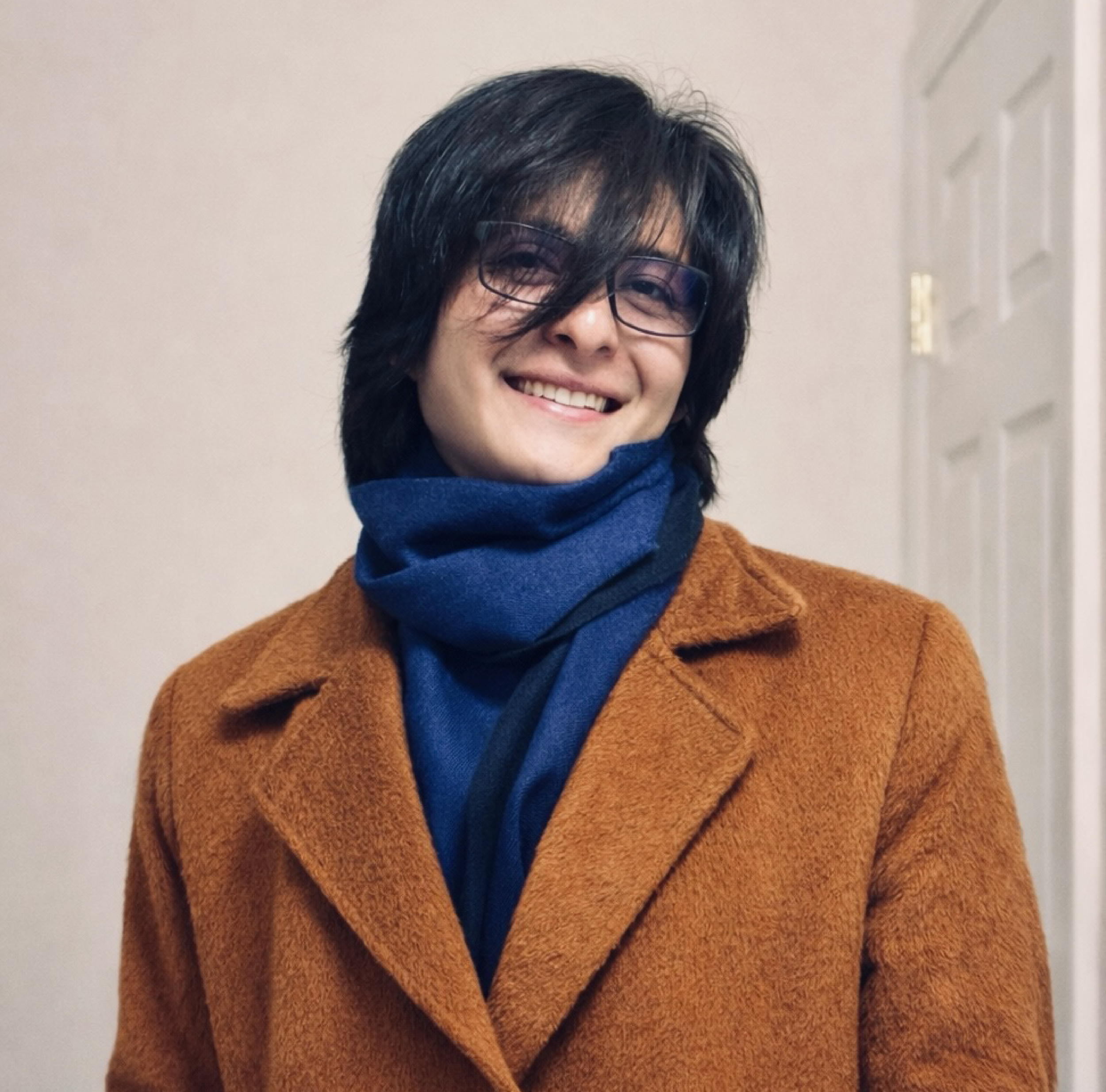
Carlos C. Mauro Gálvez
Carlos C. Mauro Gálvez (b. 1998) is a Boston-based composer, improviser, software developer, and inventor originally from Peru. His music, inspired by Peruvian traditions, Free Improvisation, Microtonality, and Timbre-Driven approaches, has been performed in the United States and Europe. He has studied composition with John McDonald, Andrew List, and Alla Cohen, and classical guitar with multi-Latin Grammy Award winner Berta Rojas. Mauro's work at the intersection of software development, digital music notation, and accessibility technologies has been showcased at the International Conference for Music Notation and Representation in Zurich, supported by Tufts University’s Music Department and the Volunteer Lawyers for the Arts organization. On a daily basis, Carlos can be found collaborating with musicians in the Boston area, writing code, or hunting for the best (and reasonably priced) mango products at local stores. He holds a Bachelor’s degree in Music Theory and Composition from Berklee College of Music and is completing his Master of Arts in Music at Tufts University.